Natural fibers · Bedding
Choosing an Organic Linen Duvet Cover: Fiber, Finish, and Construction
An organic linen duvet cover is more than a soft, rumpled layer on a bed. Its feel and everyday performance depend on where its flax comes from, how the yarn is woven, what finishing processes shape the cloth, and how the cover is designed to hold a duvet insert. Knowing what to look for makes it easier to read claims carefully—and choose a cover that suits your comfort, care habits, and priorities.
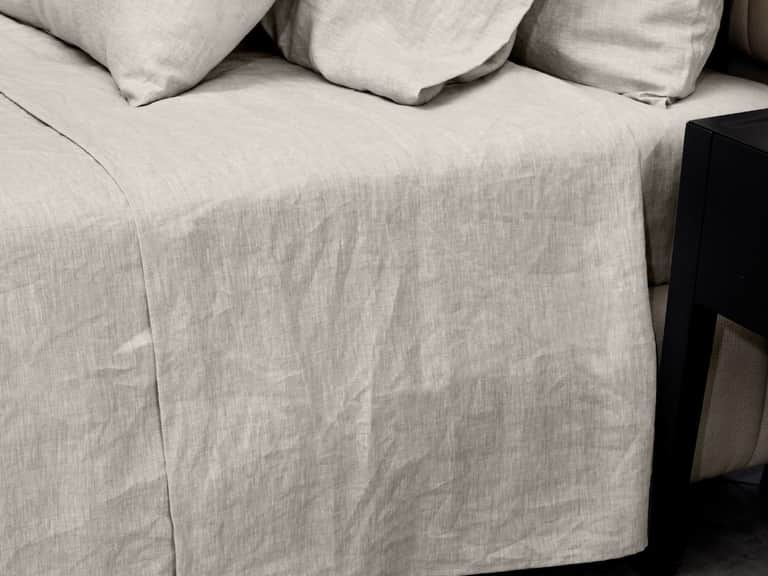
Linen has a certain clarity of purpose. It is made from flax, a plant whose fibers can be spun into a strong yarn and woven into fabric with a distinctive, slightly irregular character. On a bed, that character can mean a cool hand, an airy drape, and creases that are part of the fabric’s natural appearance rather than a flaw to be pressed away.
But “linen” alone does not tell the whole story. Fiber sourcing, certification, weave, weight, washing, and construction all influence the finished cover. Two products may both be described as organic linen duvet covers while feeling noticeably different in use. One may arrive soft and relaxed; another may feel firmer until it has been washed repeatedly. One may have a simple button closure, while another adds ties inside to keep the duvet in place.
The most useful approach is to treat the product description as a set of clues, not a verdict. Start with the fiber and its sourcing. Then consider the fabric’s finish and construction. Finally, check dimensions, care guidance, and the details that matter after the cover is on the bed.
What “organic linen” means—and what it does not
Linen is the fabric; flax is the plant from which its fibers are made. “Organic” refers to how the flax is grown and, depending on the standard involved, how later stages of processing are managed. It does not, on its own, describe the fabric’s softness, weight, durability, or environmental impact across its entire life cycle.
When a duvet cover is presented as organic, look for information about the certification behind the claim. The Global Organic Textile Standard, commonly abbreviated to GOTS, is one certification consumers may encounter. A GOTS label indicates that a product has met a defined set of requirements for organic fibers and relevant processing stages. The exact scope depends on the certification and the product’s supply chain, so it is worth checking what the label covers rather than assuming that a single word explains every material or manufacturing detail.
Certification is useful because it replaces a broad marketing claim with a standard that can be checked. It is not a universal guarantee about every environmental or social issue, nor does it tell you whether a particular fabric will suit your sleep preferences. For a careful comparison, read the product information alongside the certification claim: Is the finished textile certified? Does the description specify the fiber content? Does it identify where the flax was grown or where the fabric was woven?
Those origin details can help make a supply chain more legible. For example, the description of Naturepedic organic linen duvet cover sets identifies GOTS-certified organic flax grown in France and linen made in a GOTS-certified facility in India. It also specifies a 185-gram-per-square-meter fabric. These are useful material details to compare—not a substitute for considering the cover’s construction, fit, or care requirements.
Flax, fabric, and the question of origin
Flax cultivation is one part of a textile’s story. The fiber must be processed, spun into yarn, and woven or otherwise made into fabric before it becomes bedding. A product’s place of cultivation may differ from where it is spun, woven, dyed, washed, sewn, or certified. “Made in” can refer to a particular manufacturing stage, so a useful description distinguishes between these steps where possible.
For shoppers, this is not a test of whether a duvet cover is good or bad. It is a way to understand what a label does and does not tell you. A transparent account of origin helps you ask more informed questions about the product’s journey. It also guards against treating “European flax,” “woven in Europe,” and “made in Europe” as interchangeable phrases. They describe different things.
Organic farming claims should be read with the same care. Certification can give a stronger basis for interpreting the claim, but the word “organic” should not be taken to mean that a textile uses no processing aids, dyes, or finishing treatments. A duvet cover is a finished product, and its fiber content is only one aspect of its manufacture. Where details matter to you, seek the certification information and the maker’s description of finishing and care.
Weave and weight: why a number is only a starting point
Fabric weight, often listed in grams per square meter (gsm), gives one point of comparison. A higher number usually indicates more material by area, but it does not automatically mean a cover is warmer, softer, more durable, or better. Fiber quality, yarn construction, weave density, and finishing all play a part. Weight is most helpful when comparing fabrics described in similar terms, and least helpful when treated as a stand-alone quality score.
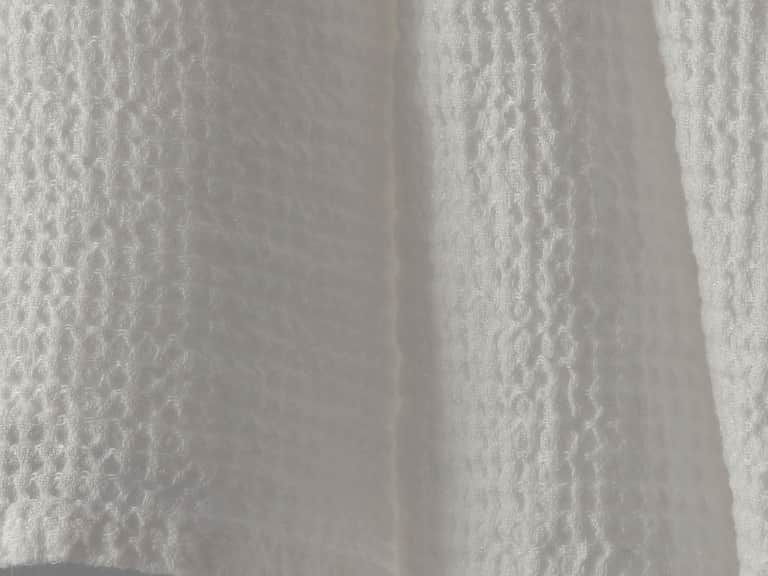
Weave affects how fabric feels, drapes, and allows air to move through it. Linen is often described as breathable, but the exact experience depends on the textile’s construction. A looser weave may feel airy and relaxed; a denser fabric may feel more substantial. Descriptions such as “lightweight,” “weighty,” or “open weave” can offer context, though they are not standardized measurements. When possible, compare the stated weight and construction details rather than relying on adjectives alone.
Thread count can also appear in bedding descriptions. It is not a simple measure of linen quality, and comparisons across different fibers and weave structures can be misleading. A clear product description should give material composition and useful construction information rather than asking one number to stand in for the entire fabric.
Stone-washed, garment-washed, and relaxed finishes
Finishing changes the way linen feels and looks when it reaches your bedroom. Stone-washed or garment-washed linen has been treated to create a softer, more relaxed surface. This can make a cover feel less crisp from the first use and give it the gently lived-in appearance many people associate with linen. An unfinished or more lightly finished fabric may initially feel firmer, then soften through regular laundering and use.
“Pre-softened” does not mean that the fabric will never change. Linen often develops a softer hand as it is washed, but the result depends on the cloth, the finishing process, and how it is cared for. Nor does a relaxed finish necessarily mean the cover is more durable. Durability is affected by fiber and yarn quality, weave, sewing, and laundering habits as well as by the surface finish.
Think about the feeling you prefer rather than assuming one finish is superior. If you want a cover that feels relatively soft right away, look for clear mention of stone-washing, garment-washing, or a relaxed finish. If you value a crisper hand, avoid treating “relaxed” as a universal synonym for comfort. Fabric feel is personal, and descriptions can only take you part of the way.
Construction details that earn their place
A duvet cover has a practical job: it surrounds the insert, protects it, and makes the bed easier to refresh. Small construction choices can make that job simpler or more frustrating. Before choosing a cover, confirm its finished dimensions against both the duvet insert and the bed. A cover that is too small can compress the insert; one that is too large may leave it shifting inside.
Internal ties are one detail to check. Ties at the corners or other points inside the cover can attach to corresponding loops on a duvet insert, helping to keep the fill distributed. They are most useful when the insert has matching loops and when the ties are secure enough for regular handling. If a product description mentions ties, check how many are included and whether they are positioned to suit your insert.
The closure is another everyday consideration. Buttons, a concealed placket, a zipper, or an interior flap each create a different balance of convenience and appearance. Product descriptions do not always identify the closure clearly, so look for an explicit detail rather than inferring it from the styling. If you remove and wash your cover frequently, ease of opening and fastening may matter as much as the decorative finish.
For example, the Naturepedic cover description specifies an eight-inch interior flap, coconut shell buttons, and inside ties. Those details explain how the cover closes and how it may secure an insert. They are more actionable than a general claim that a duvet cover is “easy to use,” because they describe the actual construction. The best configuration depends on your insert, your habits, and what you find convenient.
Seams and finishing deserve attention, too. Look for details such as a neatly finished opening, reinforced stress points, and clear care instructions. Product pages may not provide every sewing specification, but an absence of detail should not be filled in by assumption. If a particular feature is essential, confirm it before choosing.
Comfort is about the whole bed
Linen’s reputation for breathability and moisture management makes it appealing to people who want a bed that feels less stuffy. Still, no fabric can guarantee a particular sleep temperature. The room’s climate, mattress, duvet insert, sleepwear, and individual comfort all shape the experience. A linen cover is one layer in a larger system.
The duvet insert matters especially. A breathable cover paired with a heavy, insulating insert may still feel warm. Conversely, a lighter insert can make an airy linen cover feel comfortable across more of the year. Rather than expecting the fabric to solve every temperature concern, consider the weight of the entire bedding combination and whether you can adjust it seasonally.
Some descriptions make health-related claims about linen, including claims that a fabric is hypoallergenic or reduces allergens. Treat broad claims cautiously. A duvet cover can be laundered, but it cannot promise to prevent allergies or replace medical advice, regular cleaning, or appropriate bedding choices for an individual’s needs. If sensitivities are a concern, focus on the full material and certification information, and follow care instructions that suit your household.
Care: protect the fabric without overcomplicating it
Linen is a durable natural fiber, but that does not make every linen cover indestructible. High heat, harsh chemicals, an overloaded washing machine, and aggressive drying can place unnecessary strain on a textile. The care label for the particular product takes priority over general advice, especially when a cover has buttons, special finishes, or contrasting trim.
Many linen bedding instructions recommend washing in a machine with similar colors, using a gentle cycle and a suitable detergent, then drying on low heat or on a line when practical. Some linen products permit warm washing; others specify cold water. Do not treat one brand’s instructions as a rule for all linen. Check the stated maximum temperature and avoid bleach unless the maker explicitly says it is suitable.
Removing the cover promptly from the dryer can help reduce excessive creasing. Ironing is optional for many relaxed linen finishes; if you prefer a smoother appearance, follow the label’s temperature guidance. A slightly damp fabric can often respond better to steam than a fully dry one, but again, the manufacturer’s care instructions come first.
Regular, sensible care can support a cover’s useful life and keep it comfortable to use. It also helps to avoid washing more aggressively than necessary. For a duvet cover, the right schedule depends on household use and preference; the point is to balance cleanliness with the care requirements of the fabric.
A practical checklist for comparing covers
When product descriptions are full of attractive language, return to the details that can be compared. A short checklist makes the choice clearer:
- Fiber content: Is the cover 100% linen, or does it include other fibers?
- Certification: Is an organic certification named, and does the product information explain its scope?
- Origin: Does the description distinguish where the flax was grown from where the fabric was woven and finished?
- Fabric information: Are weight, weave, or other construction details provided?
- Finish: Is the linen stone-washed, garment-washed, or otherwise described as relaxed or softened?
- Fit: Do the cover’s dimensions match your duvet insert?
- Fastening: What closure does it use, and are interior ties included?
- Care: Can you comfortably follow the washing and drying instructions?
Not every maker will provide every detail, and a longer description is not automatically a more reliable one. Favor specific, verifiable information over sweeping promises. “GOTS certified,” “100% organic flax,” “185 gsm,” “inside ties,” and “machine wash cold” each communicate something different. The clearer the description is about those distinctions, the easier it is to judge whether the cover fits your needs.
A considered choice, not a perfect one
Choosing an organic linen duvet cover is ultimately a matter of balancing priorities. Certification may matter most to one household; softness from the first night may matter more to another. Some people welcome linen’s texture and easy, relaxed appearance. Others want a smoother surface or a fabric that requires less attention to wrinkles. Practical fit and care can outweigh a particular finish or place of origin.
The strongest choice is not necessarily the one with the most impressive-sounding description. It is the cover whose fiber, certification, finish, construction, and care instructions are clear—and whose attributes align with how you actually sleep and maintain your bedding. Linen’s appeal lies partly in its ability to change with use. Read the details carefully, choose with your habits in mind, and let the material be what it is: a natural fabric with texture, character, and a life beyond the first night on the bed.