A practical guide to bedding
How to Choose Bed Sheets: Weave, Fiber, Fit, and Feel
The right sheets are not defined by a single number on a label. Fiber, weave, finish, fit, and the habits of the person doing the laundry all shape how bedding feels and holds up. Start with what you like against your skin; then check whether the details work for your bed and your routine.
A sheet is a simple object with a complicated job. It rests against the body for hours, absorbs moisture, responds to room temperature, stretches over a mattress, and goes through the wash again and again. Yet shopping for one can feel like deciphering a code: thread counts, fiber claims, weave names, certifications, finishes, pocket depths, and bundles whose contents are not always obvious.
The most useful starting point is not a marketing claim but a question: What kind of surface do you want to sleep on? Linen usually feels textured and relaxed, with a natural variation that becomes more supple through use. Cotton percale is generally crisp, smooth, and matte. Other cotton constructions can feel softer, lighter, or more fluid. None is automatically best. The best choice is the one whose hand, warmth, care requirements, and fit make sense in your bedroom.
This guide breaks down the main decisions involved in choosing bed sheets. It explains how fiber and weave differ, why thread count has limits, what mattress pocket depth really means, and which questions can prevent an appealing set from becoming an inconvenient one.
Begin with feel, not thread count
Thread count is often treated as a shorthand for quality, but it describes only one aspect of a fabric: the number of threads counted in a square inch, according to the maker’s method. It does not identify the fiber, reveal the weave, or tell you how the cloth was finished. A high number cannot compensate for weak yarn, poor construction, or a texture you do not enjoy.
For a more grounded comparison, look first at the fiber and weave. Then consider the yarn, fabric weight, finishing process, and how the sheet is meant to be used. A well-made, moderate-weight fabric can be more comfortable and durable than a denser cloth chosen mainly for an impressive label figure. Descriptions such as “cool,” “soft,” or “luxurious” may help establish a mood, but they are subjective. Construction details are more useful for comparing one option with another.
Touch can be decisive when it is available, but buying online requires reading between the lines. Terms such as stone-washed, garment-dyed, and relaxed often describe finishing choices that alter the initial hand or appearance. A crisp, plain-weave linen and a washed linen may share the same fiber while feeling notably different on the bed.
Fiber: linen and cotton offer different experiences
Fiber is the raw material from which yarn is made. For everyday sheets, linen and cotton are two widely used natural fibers, but the names alone do not tell the complete story. Yarn quality, fabric construction, finish, and care can all influence the result.
Linen: texture, drape, and a lived-in character
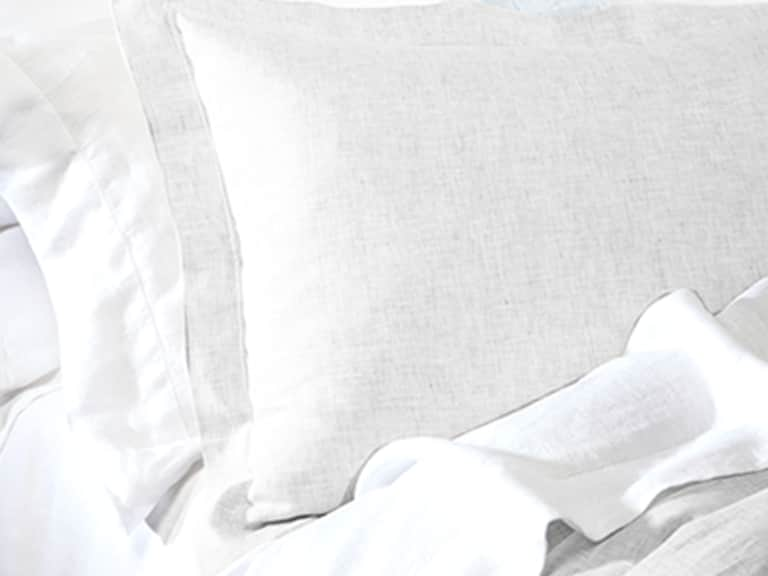
Linen comes from flax. Its surface typically has more visible texture and irregularity than finely finished cotton, giving it a relaxed look rather than a uniformly smooth one. Many people value linen for its airy feel and easy, informal drape. It can feel crisp at first and become softer with regular washing and use, though the pace and degree of change depend on the fabric and its finish.
Linen is not wrinkle-free. Creases are part of its familiar appearance, and choosing it often means accepting a less polished, more natural surface. A prewashed or stone-washed finish may feel gentler from the beginning, while an unwashed or more structured fabric can have a firmer hand. Check the product description for these details instead of assuming that every linen sheet feels identical.
Care instructions matter. Many linen sheets can be machine washed, but the recommended water temperature, detergent, and drying method vary. Avoid treating a fiber’s reputation for durability as permission to use any laundry routine. Excessive heat, overloading, or harsh products can place unnecessary stress on fabric and seams.
Cotton: an adaptable family of fabrics
Cotton is a fiber, not a single texture. It can be woven into a crisp percale, a smooth sateen, a light voile, or a range of other constructions. Staple length, yarn preparation, density, and finishing influence how each fabric feels. That is why two sets labeled “100% cotton” may perform and feel quite differently.
Cotton percale is a plain-weave fabric often associated with a dry, crisp hand and a clean, matte appearance. It suits sleepers who like a fresh, lightly structured surface. Percale can soften with laundering, but it generally keeps a different character from the more visibly textured drape of linen.
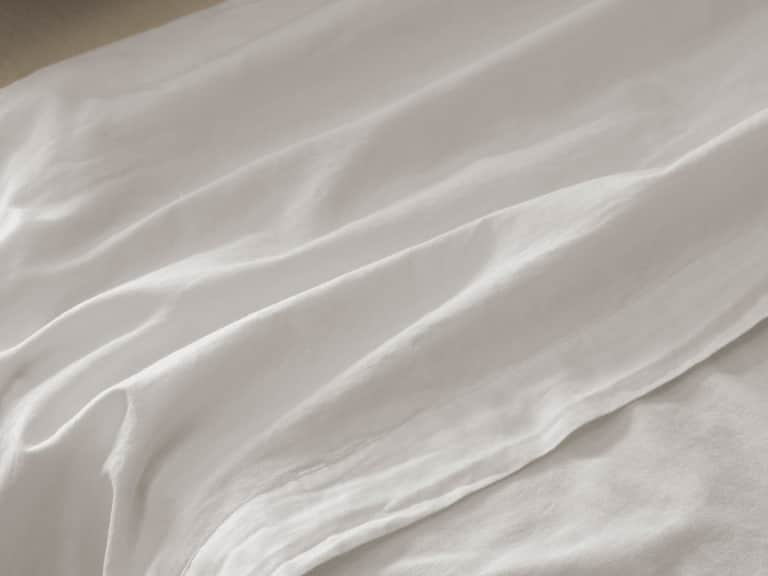
Other cotton fabrics may be smoother or more fluid. Cotton voile, for example, is commonly light and soft; a double-layer construction changes the way it feels and hangs. If a listing identifies the weave or fabric weight, use that information alongside the fiber content. “Cotton” by itself is not enough to predict the experience.
How to choose between them
If you like visible texture, a relaxed bed, and a fabric that develops character with use, linen may appeal. If you prefer a crisp, even surface, cotton percale may be a better match. If your priority is a softer or lighter cotton hand, look beyond the word “cotton” and check for the named construction and weight.
Climate and personal comfort should guide the decision, but avoid expecting one fabric to regulate every sleeper’s temperature in every room. Bedding works alongside the duvet, mattress, sleepwear, room temperature, and individual preference. Consider the whole setup rather than treating a sheet as a standalone climate-control device.
Weave: the structure behind the surface
Weave describes how yarns cross one another to form cloth. The pattern affects texture, drape, durability, and the way a fabric presents itself. A plain weave, in which yarns cross in a simple alternating pattern, is used for fabrics such as percale and many linen sheets. But the same basic weave does not guarantee the same hand: yarn and finishing still matter.
When comparing types of bed sheets, look for specific terms rather than relying on broad adjectives. “Percale cotton” gives more information than “soft cotton.” “Plain-weave linen” tells you something about construction, while “washed linen” signals a finish that may change the initial feel. Fabric weight can also help establish whether a sheet is relatively light or substantial, though figures are most useful when compared within similar fibers and constructions.
A weave is not a quality ranking. A crisp surface is not inherently better than a soft one, and a heavier fabric is not automatically more durable or comfortable. The right structure depends on preference and use. If you sleep warm, you may value a fabric that feels airy and does not cling; if you prefer a more enveloping hand, a lighter, crisp sheet may not be satisfying regardless of its technical merits.
Fit: measure the mattress, not just the label
A fitted sheet that slips off or pulls tight can make an otherwise excellent fabric frustrating. Mattress dimensions are only part of the equation. The fitted sheet must also accommodate the mattress’s depth, including any topper or pad that will remain in place beneath it.
Start by measuring the mattress from edge to edge, then measure its depth from the bottom edge to the top surface. Include a topper if you use one. Compare these figures with the fitted-sheet dimensions and pocket depth given by the manufacturer. A listing that states a 15-inch pocket, for example, supplies a useful reference point—but check whether the stated depth is designed to include additional room for a topper and whether the elastic runs around the full perimeter.
Do not assume that a sheet marked “deep pocket” will fit every deep mattress. The term is not a substitute for dimensions. A sheet that is too shallow may pull away at the corners; one with excess depth may bunch or feel loose. A fully elasticized edge can help hold the fabric in place, while the cut and fabric’s stretch or structure also affect fit.
Flat sheets have their own practical dimensions. Check the listed width and length against your mattress and preferred tuck. A sheet that allows generous coverage can be more comfortable for people who move during the night, but dimensions and bed-size naming conventions differ among makers and markets.
Check exactly what comes in the set
The word “set” can hide important differences. One package may include a flat sheet, fitted sheet, and two pillowcases; another may be sold without a flat sheet or may include a different number of pillowcases depending on size. Pillowcase dimensions can vary as well, particularly between Standard, Queen, and King formats.
Before ordering, verify each component in writing. Confirm the fitted-sheet depth, flat-sheet dimensions, pillowcase count, and pillowcase size. If you are replacing only one item, check whether the color and fabric are intended to coordinate with existing pieces. Similar names do not guarantee an exact match across different production runs, fabric finishes, or collections.
Some products are individual pieces rather than complete sets. A standalone flat sheet, pillowcase pair, or duvet cover may be a useful choice if you are building a bed gradually, but the listing should make the contents clear. A quick inventory prevents an attractive photograph or product name from creating the wrong expectation.
Finish and care: the everyday test
Finishing can change both the first impression and the way a sheet behaves over time. Prewashing, stone-washing, or garment dyeing may give fabric a softer or more varied appearance before it reaches the bed. A crisp finish may preserve a more structured feel. Descriptions should be read as clues rather than guarantees: different mills and makers may use the same words for fabrics with distinct results.
Care is part of choosing well because sheets need regular laundering. Look for the recommended wash temperature, cycle, detergent guidance, and drying method. Some linen products call for cold, gentle washing and low-heat drying; others permit warmer washing. Cotton instructions vary too. The label for the specific item takes priority over general rules for a fiber.
- Wash sheets with enough room for water and movement; avoid overcrowding the machine.
- Use a mild detergent and follow the care label, particularly for dyed or delicate fabrics.
- Keep drying temperatures moderate when recommended, and avoid over-drying.
- Skip fabric softener if the maker advises against it, since residue may build up or affect the fabric’s feel.
- Remove sheets promptly if you want to reduce deep creases, or accept a relaxed finish if that suits the fabric.
Simple care is not the same as no care. A fabric described as easy-care may still need the right temperature and a sensible drying routine. If you do not want to iron, look for a finish and appearance that feel comfortable to you without pressing. Linen’s natural creasing is often part of its appeal; crisp cotton may look best with a different approach, depending on the specific fabric.
A note on organic claims and sustainability
For shoppers interested in responsible materials, fiber origin and certification can add useful context. A stated country of flax cultivation or fabric weaving tells you part of a product’s supply-chain story, though it does not describe every stage of production. Likewise, a certification has a defined scope; it should be understood by checking what standard is named and what the claim covers.
Organic certification can help distinguish products made under specified agricultural and processing requirements, but it does not, by itself, tell you how long a sheet will last or whether it suits your needs. Durability, repairability, laundering habits, and how often a textile is replaced all matter to its practical life. A considered purchase is not simply the one with the most reassuring language; it is the one you will use and care for over time.
Choose claims that are specific enough to evaluate. Look for the named fiber, origin information where available, and a recognized certification if one is advertised. Treat vague terms such as “eco-friendly” as prompts for further questions rather than as proof of a particular environmental benefit.
A short decision framework
When comparing sheets, take the decision in a practical order. First, decide what surface you prefer. Then make sure the construction and dimensions suit the bed. Finally, assess care and sourcing claims against what you can verify.
- Choose the hand: textured and relaxed linen, crisp cotton percale, or another clearly identified fabric.
- Read the construction: note fiber content, weave, weight, and any prewashing or finishing.
- Measure the bed: include mattress depth and any topper when checking fitted-sheet pocket dimensions.
- Audit the bundle: confirm every piece, size, and pillowcase count.
- Review the care: decide whether the wash and drying instructions fit your routine.
- Evaluate claims: distinguish specific fiber origins and certifications from broad promotional language.
For example, a buyer who wants a soft, tonal cotton layer might consider a double-layer cotton voile such as the Miro Plain Bed Sheet, whose stated material and construction make its character clearer than a generic cotton description. Someone looking for linen pillowcases can compare the dimensions and fiber details of the DownTown Company Layla Linen Pillowcases. These examples are starting points for assessing construction and specifications, not substitutes for checking the fit and care details that matter to your own bed.
Questions to ask before you buy
- Is the listed fiber 100% linen, 100% cotton, or a blend?
- Does the description name the weave, such as cotton percale?
- Has the fabric been washed, softened, or garment-dyed?
- What is the fabric weight, and is it being compared with a similar construction?
- What are the mattress and topper depths, and will the pocket accommodate both?
- Which pieces are included, and how many pillowcases come in each size?
- Can the fabric be machine washed, and what temperature and drying method are specified?
- Are origin or certification claims named clearly enough to verify?
- Will the texture and degree of wrinkling suit the way you want your bed to look?
The useful answer is the specific one
Choosing bed sheets is less about finding a universal winner than matching a fabric to a person, a mattress, and a routine. Linen offers a tactile, relaxed surface that changes with use. Cotton percale brings a more even, crisp hand. Other cotton constructions provide different weights and degrees of softness. Fiber identifies the material; weave and finish explain much of the experience; fit and care determine whether that experience works night after night.
Read beyond thread count. Measure before ordering. Check the contents of the set and the instructions on the care label. When product descriptions provide concrete details—fiber, weave, weight, dimensions, finish, and origin—you can compare them with greater confidence. The result is not merely a better-looking bed, but bedding chosen for the way you actually sleep and live.